
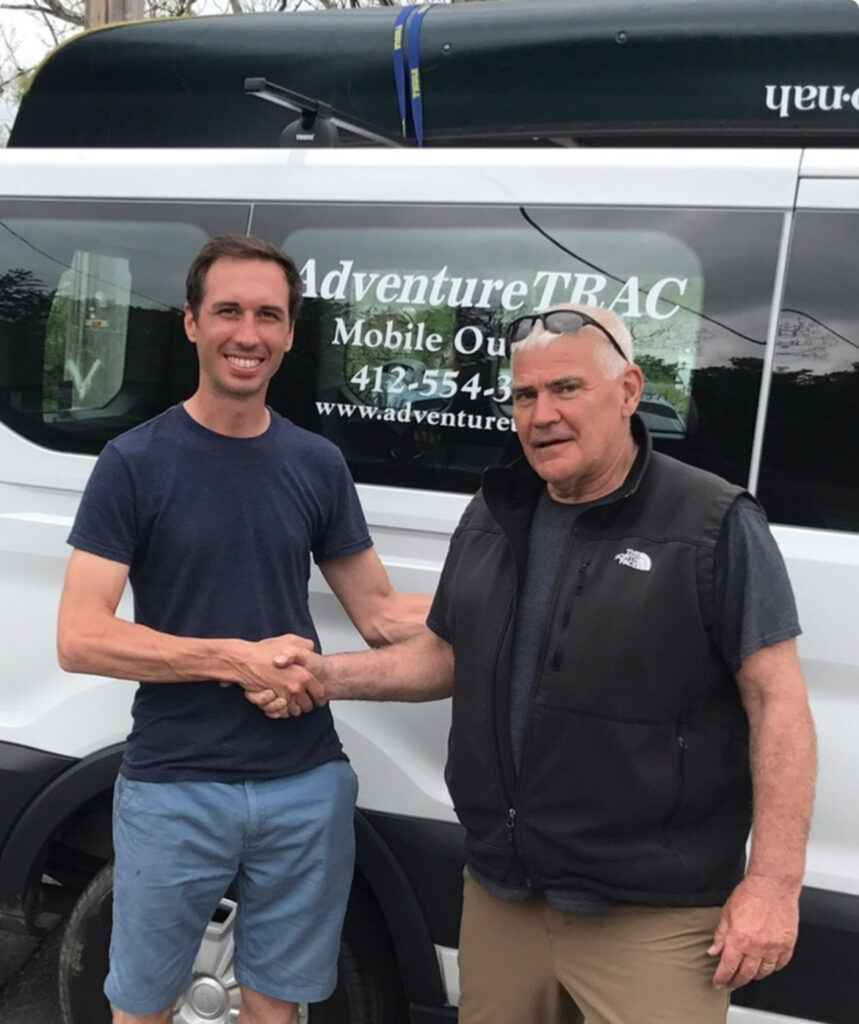
I met Paul Mang at one of the most pivotal moments in my life. It was 2015 and I had just turned thirty‑three. I’d been married for five years, and our daughter had just celebrated her first birthday. On paper, I was in the process of building a stable future—pursuing a full‑time teaching position after earning my master’s in teaching. In reality, I was a highly functioning alcoholic quickly becoming a non‑functioning one.
After years of silently struggling to quit, I hit rock bottom. Withdrawal seizures landed me in the hospital for several days, followed by a week in detox. From there, I found myself on the doorstep of Little Creek Lodge, a sixteen‑bed men’s treatment facility tucked into the Poconos. My family had found it—one of the few long‑term, all‑male programs with both outdoor therapy and a music studio, two of my interests.
That’s when I met Paul.
My first impression of him was simple: I liked him. He had warmth in his eyes, a good heart, and the steady confidence of a man who didn’t need bravado. He was a man’s man. I had lost my father five years earlier, at twenty‑eight, and without realizing it I had been moving through life rudderless, without form. Even though I was already a husband and father, I was far from the man I wanted to be. Paul carried himself in a way I admired and wished to become.
From the early days of my stay, the time we spent outdoors in nature began loosening something inside me. During our first hike at Ricketts Glen State Park, someone said something and I laughed, truly laughed for the first time in what felt like forever. Emotional weight was beginning to fall away.
Three times a week, Paul would pull up to the lodge to take us out—kayaking, hiking, horseback riding, biking, fishing—whatever the weather would allow. He looked a bit like a stocky drill sergeant: square shoulders, wide stance. He’d flash a grin and say, “Let’s go, cupcakes.” Down the road we’d go. Once we arrived at our destination we’d tumble out of the van and quiet down as he laid out the plan and the non‑negotiable safety rules.
On the river, he was a master. He knew the shallow spots, the tricky rocks, the hidden channels. If he blew his whistle and lifted his paddle straight up, we’d fall into a line behind him like obedient little ducklings. If he shouted, “Eagle!” we knew to look up immediately.
Two months into the program, I was beginning to feel something shift in me—not in a woo‑woo way, but in a visceral, undeniable way. The immature drunk wiseass in me was gone. What remained was the clay I would eventually mold into the man I was meant to be.
Then came Day 71.
It was early November—cold, windy, the kind of day where the sun shows up but doesn’t do much. We were scheduled to kayak the Delaware River, and I didn’t want to go. Luckily, I didn’t have a choice.
Floating next to Paul that day, the idea rose up inside me and I was saying it out loud before I even knew it.
“I want to do what you do,” I said. “Only back where I live. I want to run an outdoor program like this at a treatment center near my home.”
Paul looked at me for a moment—one of those steady, reading‑you looks.
“I would love to help you do that,” he said, “if that’s something you ever really decide to do.”
That was it. The spark. The vision. Someone I respected—someone who embodied the man I hoped to become—had looked at me and said, I see it too. When we got back, I wrote feverishly about it in my journal.
Eventually, I graduated the program and returned home.
Life went on. Over the next two years, I stayed sober, attended meetings, worked as a therapeutic staff support, and welcomed our second child. Professionally, I floundered. I drifted away from the idea of teaching high school English and applied for over a hundred writing and marketing positions with no traction. The dream I’d voiced on the Delaware faded into the background.
It wasn’t until months of frustration that I remembered the journal. I flipped to Day 71 and felt something awaken in me. I texted Paul: “Remember when you said you’d help me start an outdoor program? Does that offer still stand?”
Thirty seconds later, my phone rang.
“When we getting started?” Paul said.
What began as a dream started becoming real. I built the first version of AdventureTRAC—a brochure, then a website. I spent countless nights up until 2 AM working on the business. I took days off to drive around to treatment centers, knocking on doors, setting up meetings. But still, no traction.
I realized I needed skin in the game. If a center finally said yes, I had no equipment. So I went for funding. That journey alone could fill a chapter.
When the funding finally came through, Paul was right there. I told him I was buying twenty kayaks, probably cheap ones.
Paul just said, “If you buy cheap, you’ll be replacing them in a few years. Get something that’ll last four or five. Looks good, lasts long, and you can resell.”
His equipment—bikes, boats, snowshoes—were always top‑notch. I bought the same kayaks he used, from the same outfitter. Paul’s kayak trailer was custom‑made by his welder; mine was too. That’s how closely I followed his lead.
Eventually, AdventureTRAC found its home at SpiritLife, a treatment center in Indiana, PA. I created and ran their outdoor program for six years while continuing my seasonal rental and shuttle business on the Youghiogheny River. Through those years, as AdventureTRAC grew, so did I. I was learning how to follow my own path—showing up fully for my wife, for my kids, and for the man I was becoming.
Over the years, Paul and I would talk about our seasons, our gear, our programs. He’d tell me when he was buying new kayaks or bikes in case I wanted to turn over my inventory too. Our relationship stretched quietly across nearly a decade. Once I began running my own program at SpiritLife, Paul would often check in—asking if I’d gotten the boats out yet in the spring, or whether we had enough snow down our way to take the guys snowshoeing. Working alongside my mentor and slowly growing into a peer was one of the most meaningful parts of the journey.
One Christmas, after AdventureTRAC had been running a few years, I sent him a gift: a framed photo of the two of us on the day I picked up my kayaks and trailer. The placard read:
“And then one day I met a man named Paul Mang, and he changed my life. And for that I am forever grateful.”
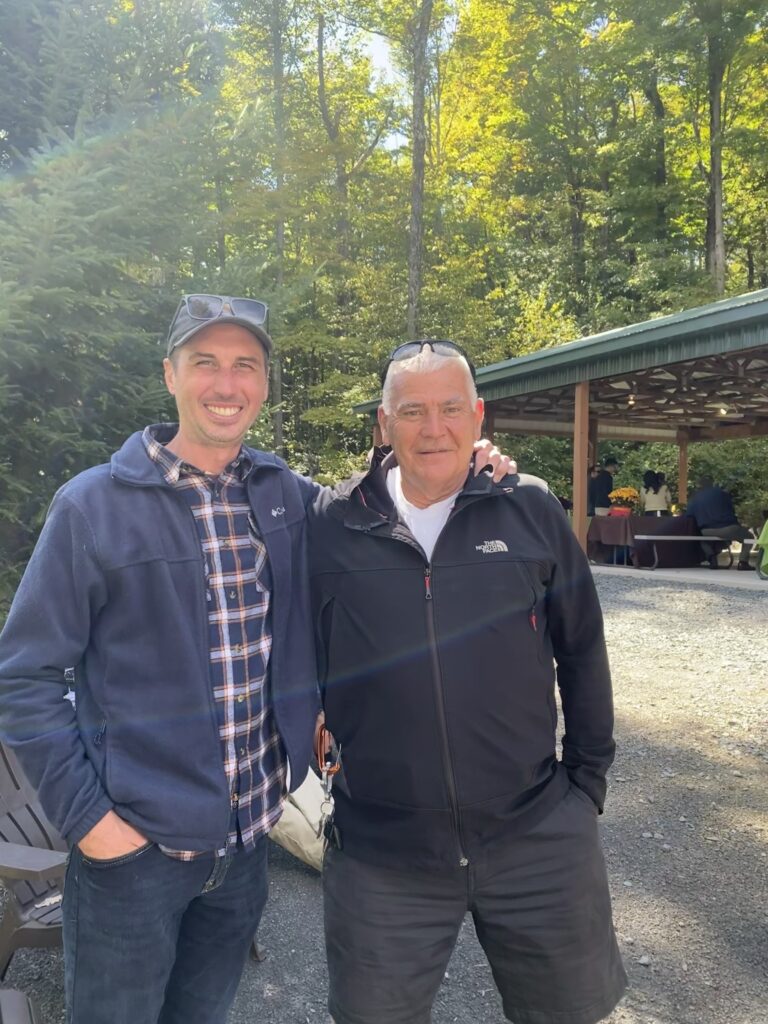
I didn’t see Paul often—mostly at the Little Creek alumni picnics where he’d be grilling London broil and keeping the guys on their toes. But we talked and texted regularly for nearly ten years.
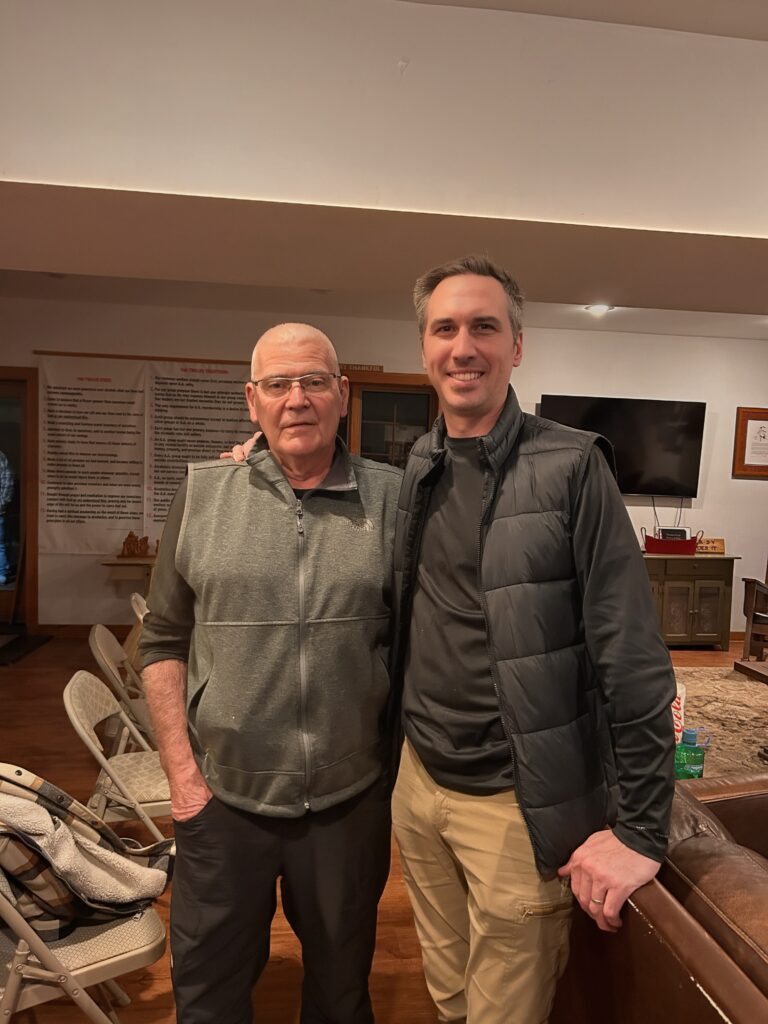
The last time I saw him was last December. I drove six hours to Little Creek to celebrate some alumni milestones. Paul was cooking dinner, moving between tasks, giving orders, keeping the guys accountable. He looked thin. He told me about the cancer. The prognosis was bad, but he was optimistic.
We talked about how long it had been since I’d come through as a client. It didn’t feel like yesterday, but it didn’t feel like ten years either.
Less than two months later, he was gone.
The sadness hit me in a familiar place—the same deep place where I’d grieved my father. The world had lost a great man, and so many people who knew him must have felt exactly as I did.
Sometimes I wonder who I’d be if alcoholism hadn’t taken me to the edge. But the truth is, without that darkness, I never would’ve met Paul. I never would’ve found my purpose. My entire career—AdventureTRAC, SpiritLife, The Cedar House, the way I show up as a man today—was forged in the fire that nearly destroyed me. Losing Paul was heartbreaking, but knowing him was life-changing. Every time I take someone outside and watch them breathe a little easier, I’m reminded that I’m living the dream we talked about on the Delaware River. And in that way, and so many others, Paul is still with me.